
Whistle Hill - Lot 6
Location
SALEM, NH
Size
4,000 SF
Some homes begin with a set of plans. Others begin with a bold vision.
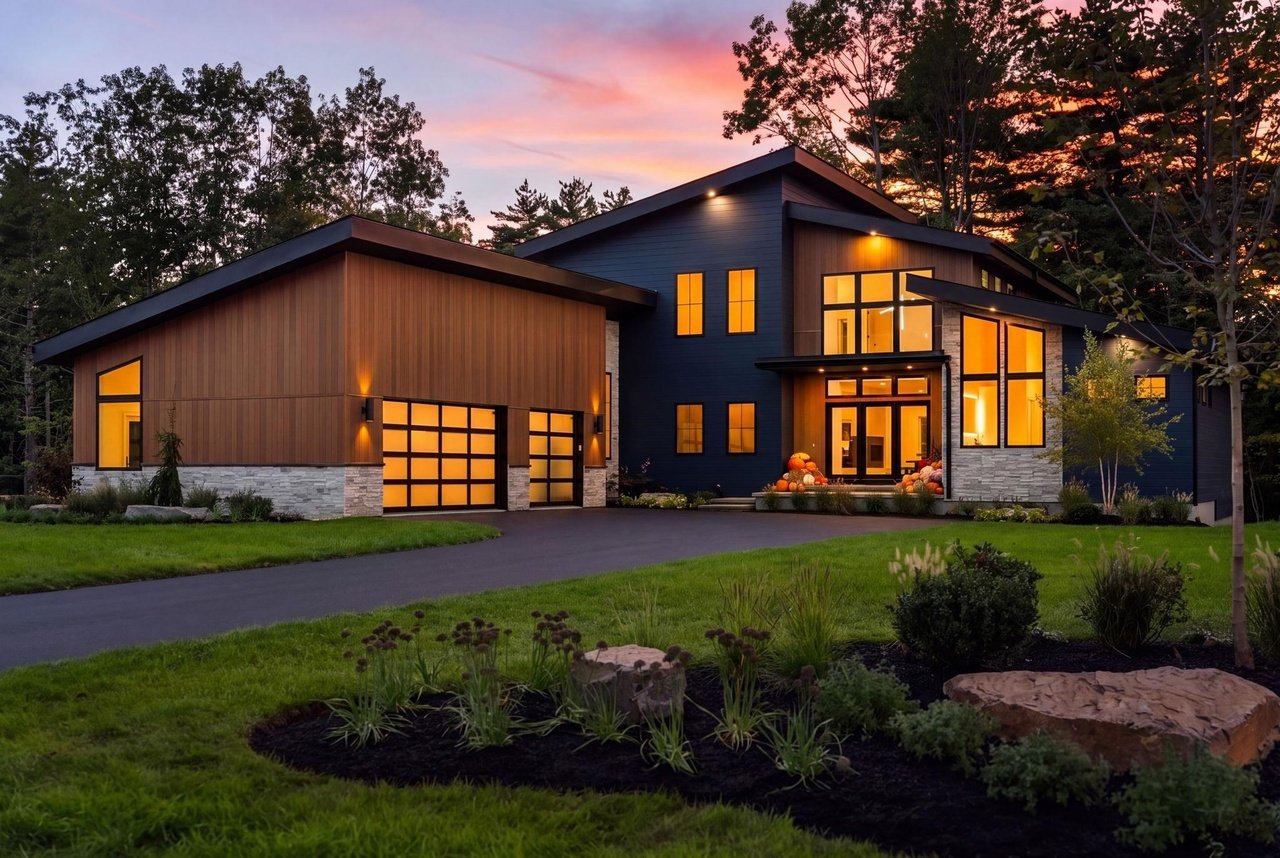
6 Whistle Hill is a distinctly modern 4,000 sf residence designed by RWH Architect and built by DHB Homes, bringing a new architectural language to Southern New Hampshire. Set against a wooded landscape, the home blends sculptural contemporary design, refined materials, and highly considered living spaces into a residence that feels both sophisticated and effortless.
From the outset, the goal was clear: create a home that felt undeniably modern without losing the warmth, comfort, and connection to nature expected from a luxury New England residence.
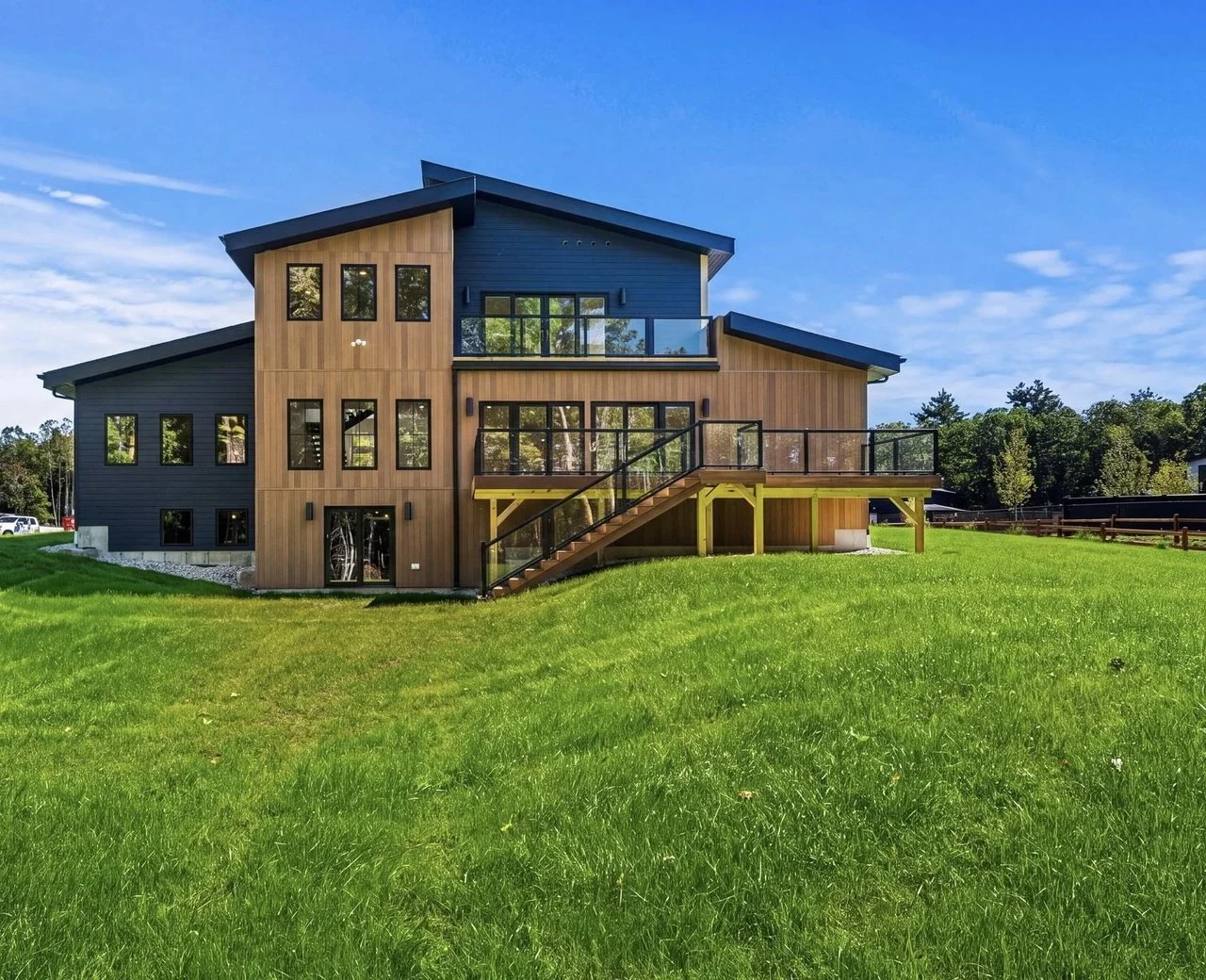
The exterior establishes that identity immediately. Dramatic shed rooflines, expansive glazing, vertical wood detailing, deep blue cladding, and a grounded natural-stone base create a composition that feels architectural rather than ornamental. Clean forms and strong proportions give the residence a striking presence, while warmer materials soften the geometry and connect the home naturally to its wooded surroundings.
One of the primary design challenges was introducing contemporary architecture into an area where the surrounding residential character is predominantly traditional.
Rather than dilute the modern concept, RWH embraced it.
The design uses natural stone, warm wood tones, restrained colors, and carefully proportioned roof forms to create a home that feels progressive without feeling disconnected from its setting. The result is unapologetically contemporary, yet grounded enough to belong within the landscape.
It represents a shift in what luxury residential architecture can look like in Southern New Hampshire.
The wooded setting offered an opportunity for expansive windows and strong indoor-outdoor connections, but it also introduced a critical design question: how do you maximize natural light while maintaining privacy?
RWH studied views, sightlines, interior programming, and window placement together rather than treating glazing as an exterior feature alone.
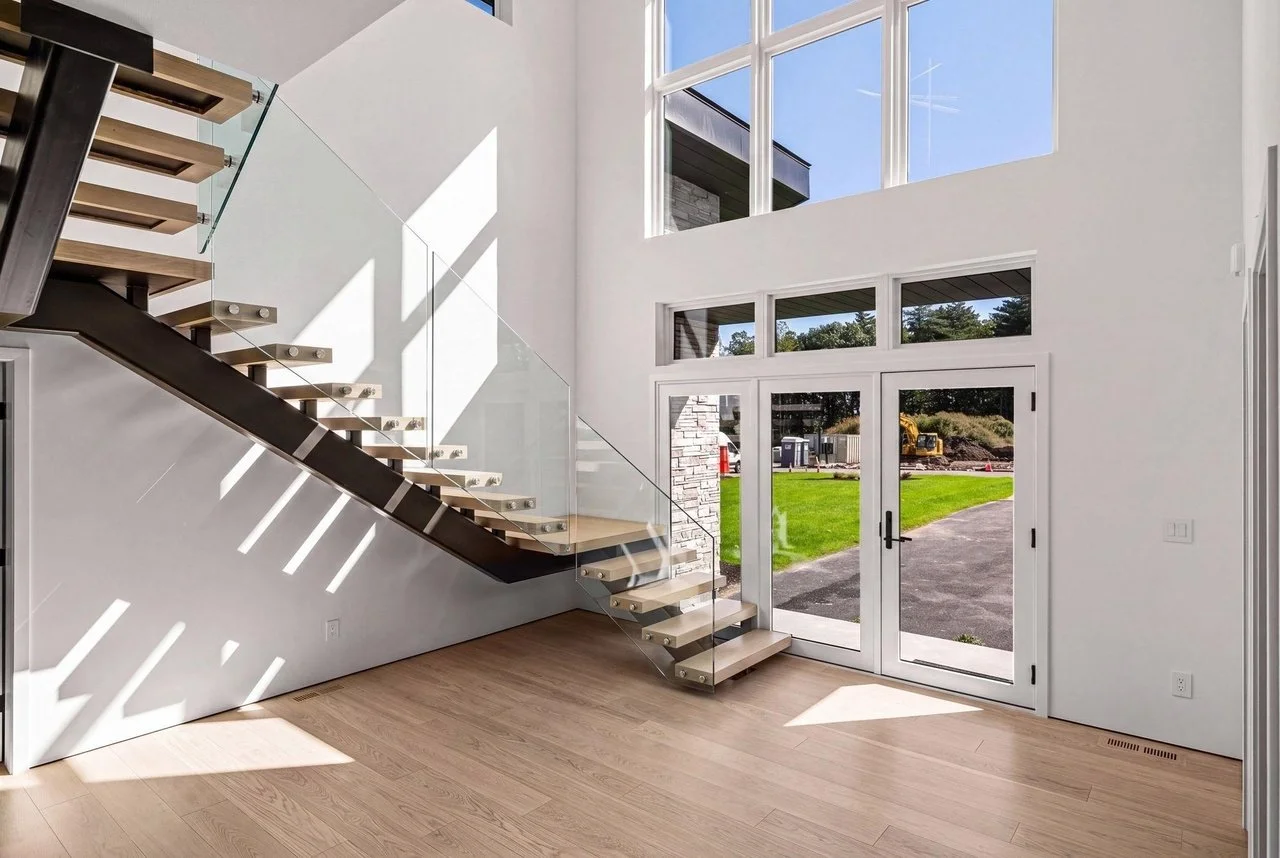
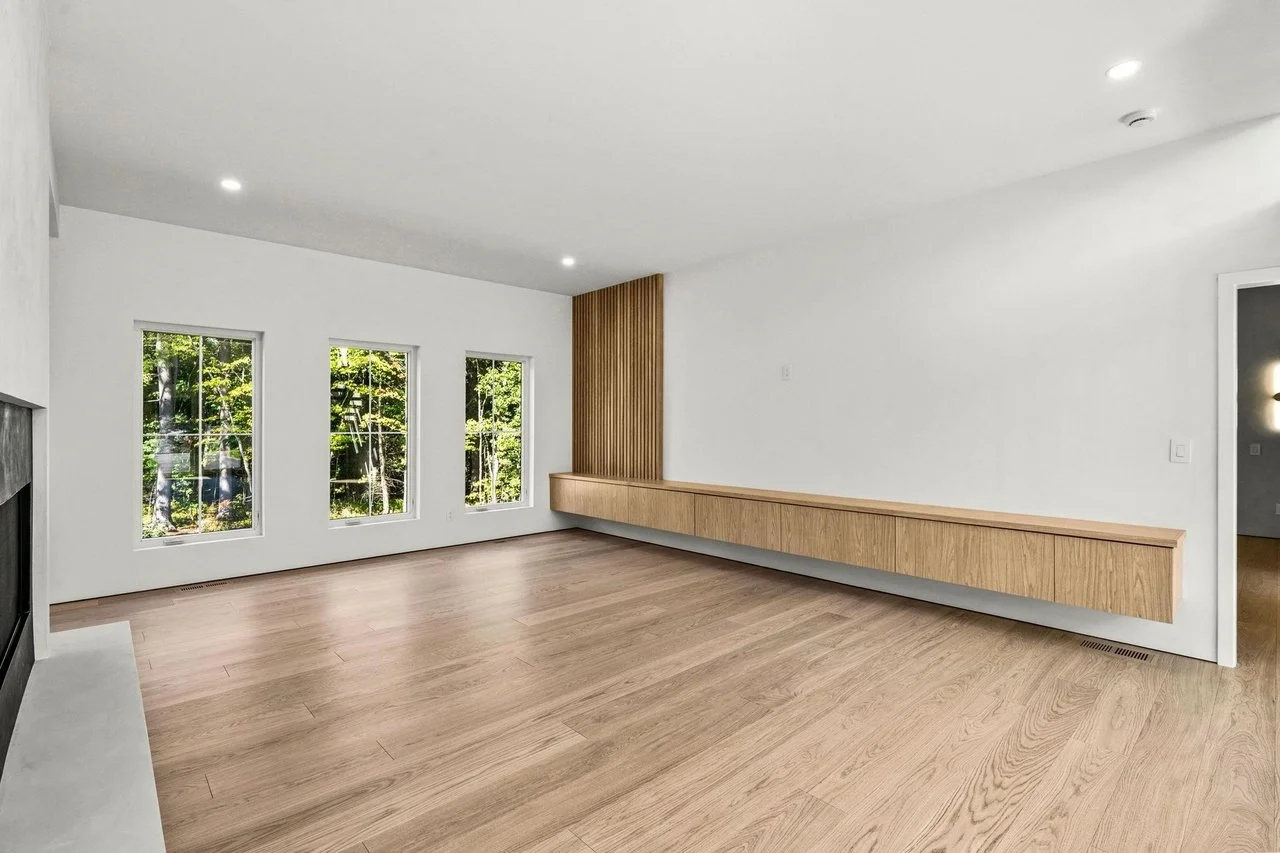
Large windows were strategically positioned to frame the landscape and bring daylight deep into the home, while roof overhangs, spatial zoning, and carefully controlled views help preserve privacy in the primary living spaces.
The result is a home that feels open and connected without ever feeling exposed.
Inside, the layout was designed around movement, functionality, and experience.
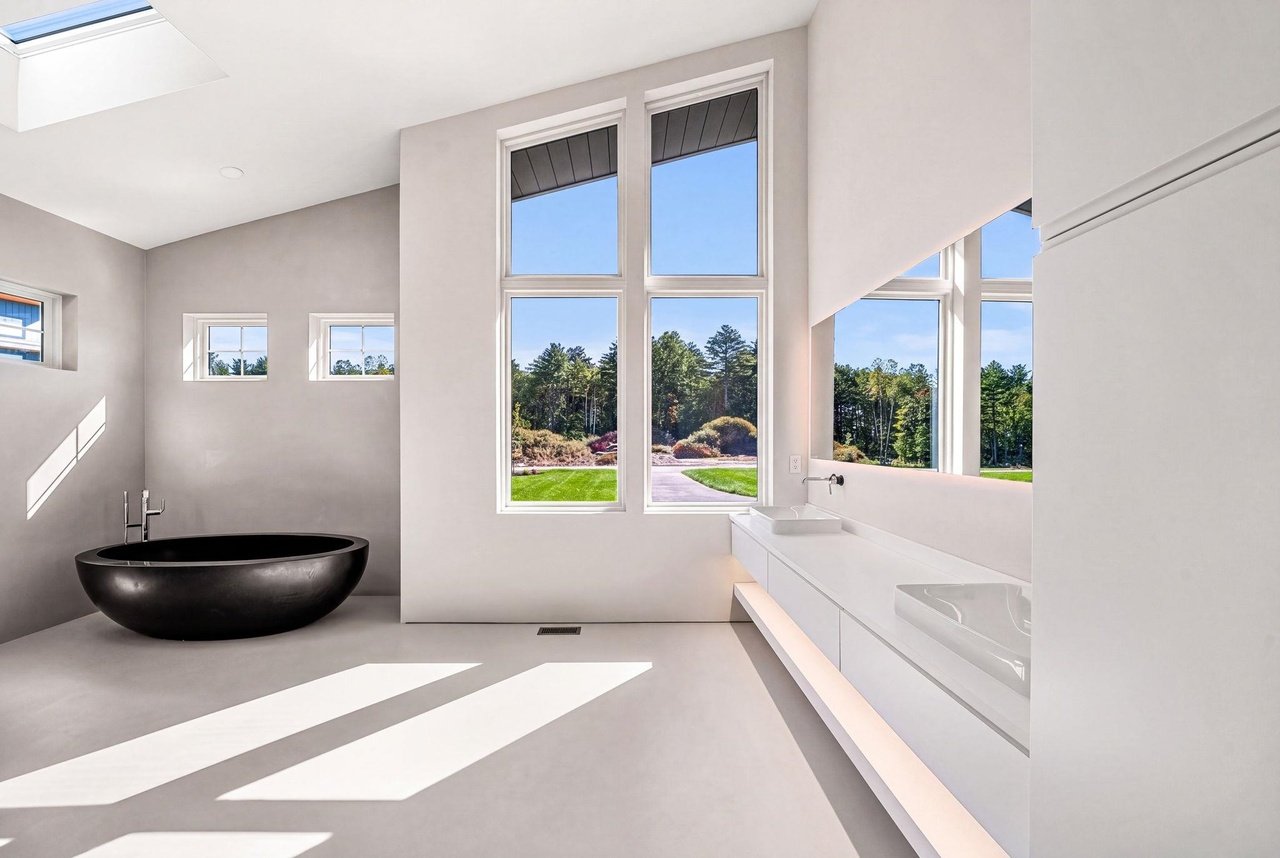
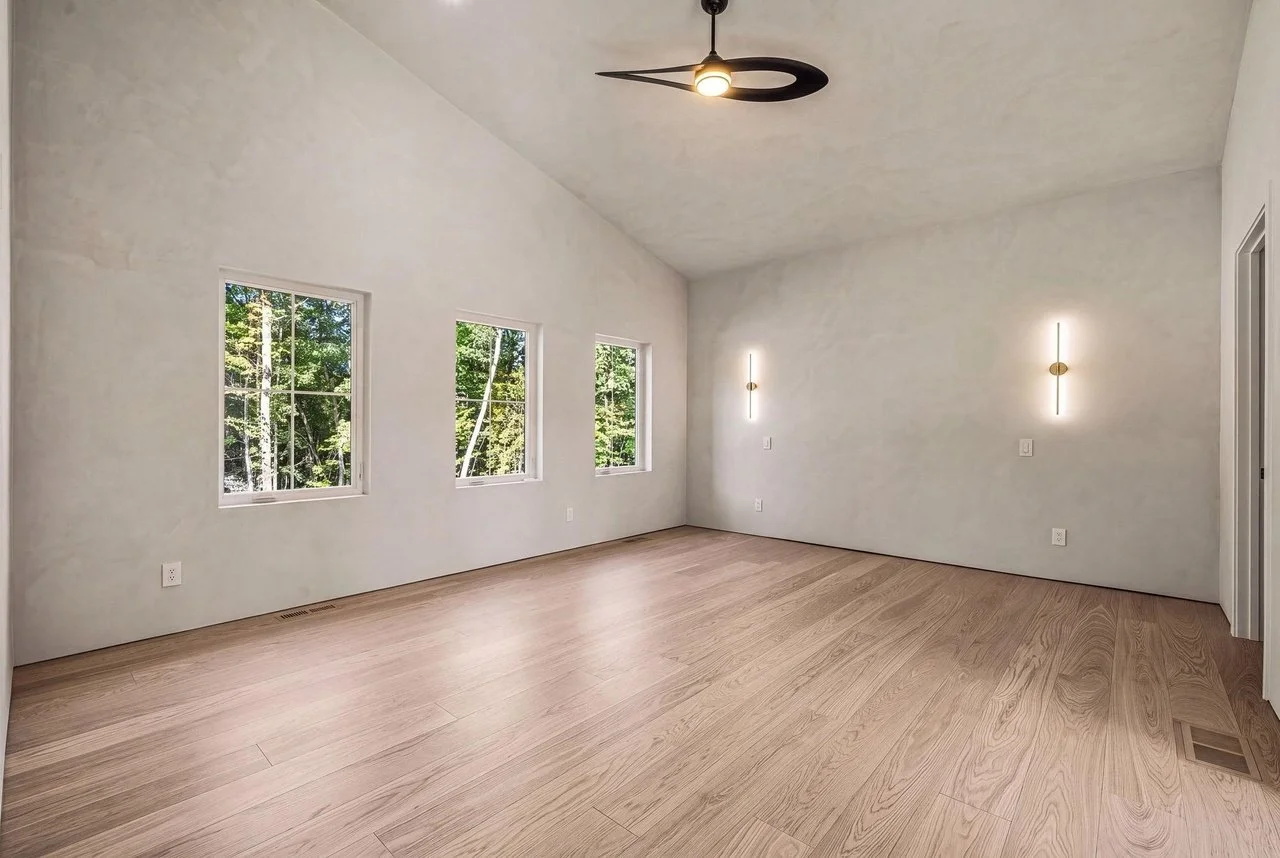
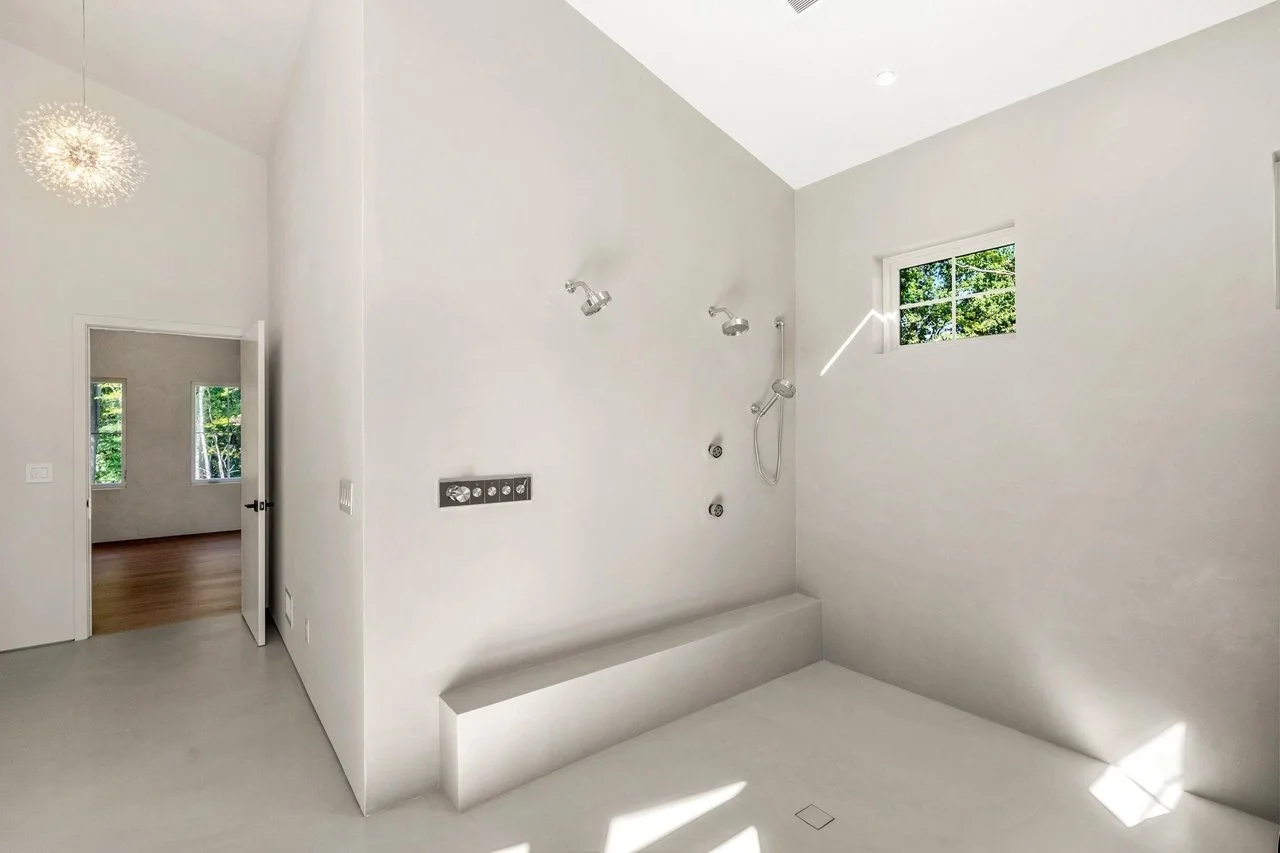
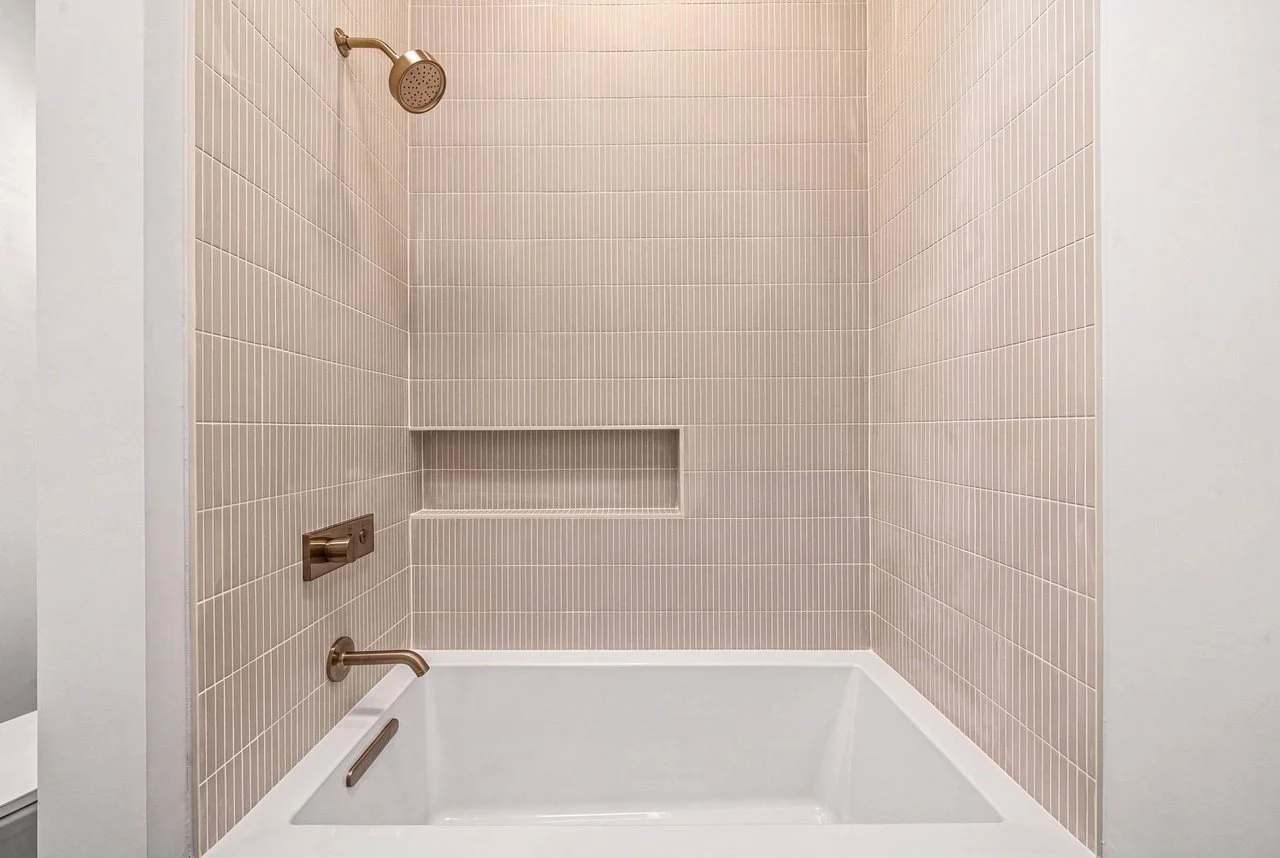
The first floor is anchored by a private primary suite, creating a quiet retreat separated from the home's primary social spaces. Venetian plaster walls and ceiling introduce subtle texture, while the primary bathroom delivers a more architectural approach to luxury with a microcement walk-in shower, extensive custom plumbing, matte-black soaking tub, oversized double vanity, and private water closet.
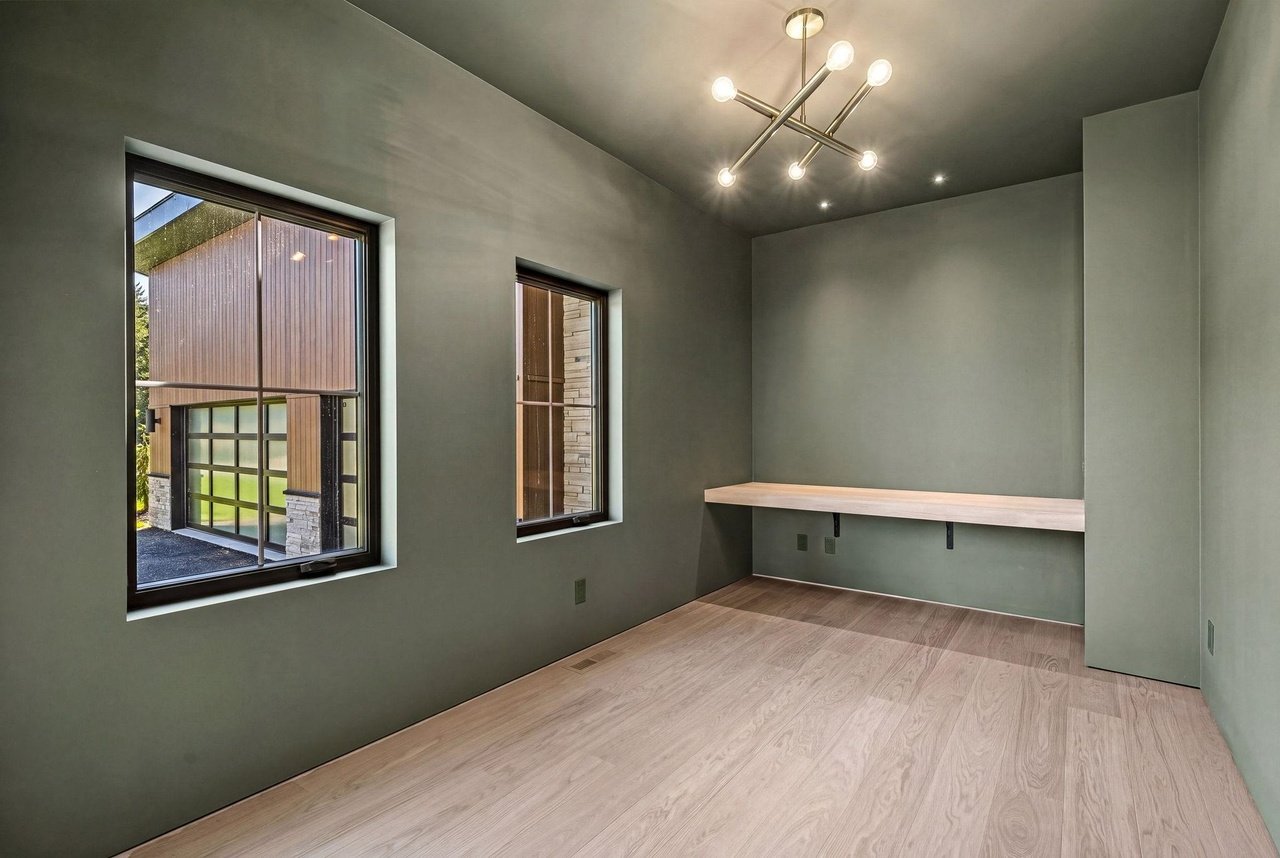
Just steps away, a dedicated home office creates separation between work and relaxation without disconnecting it from the primary suite.
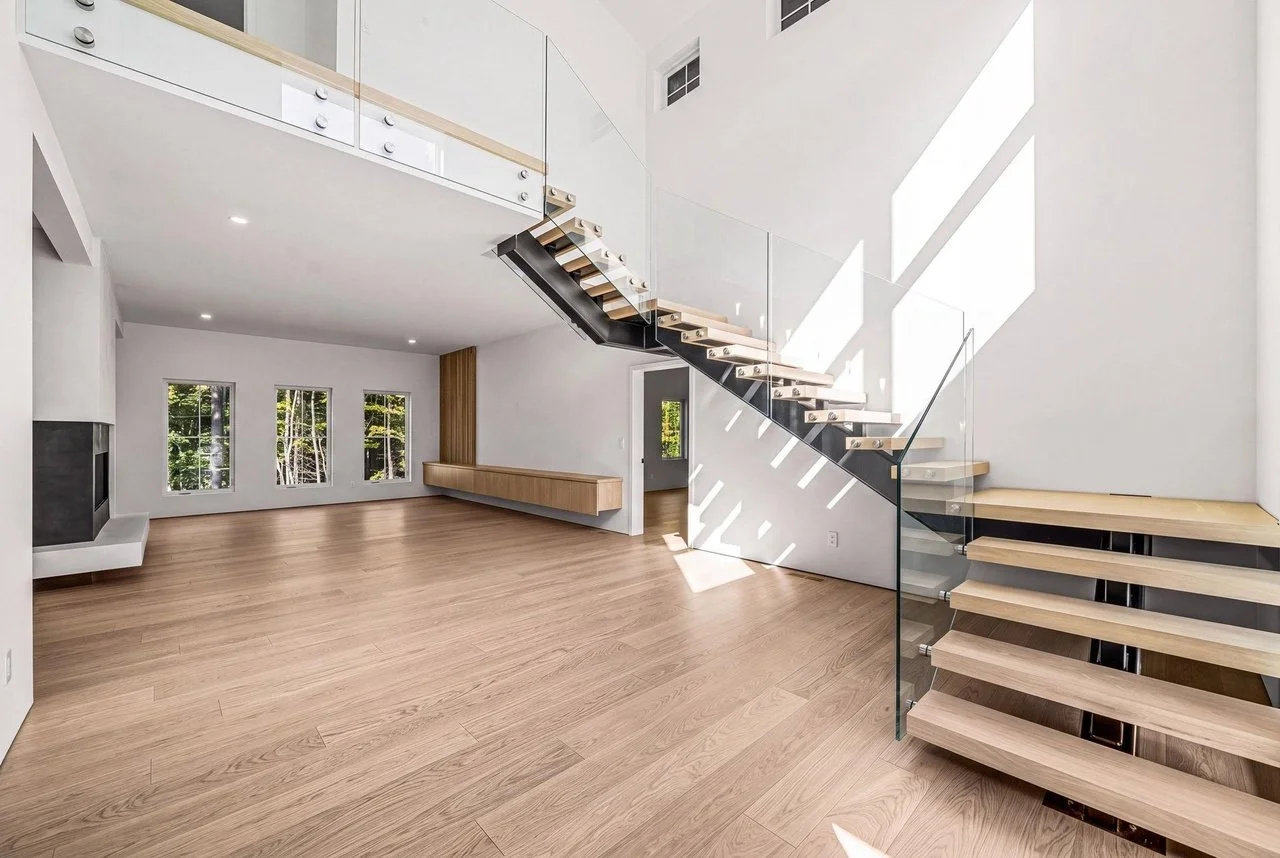
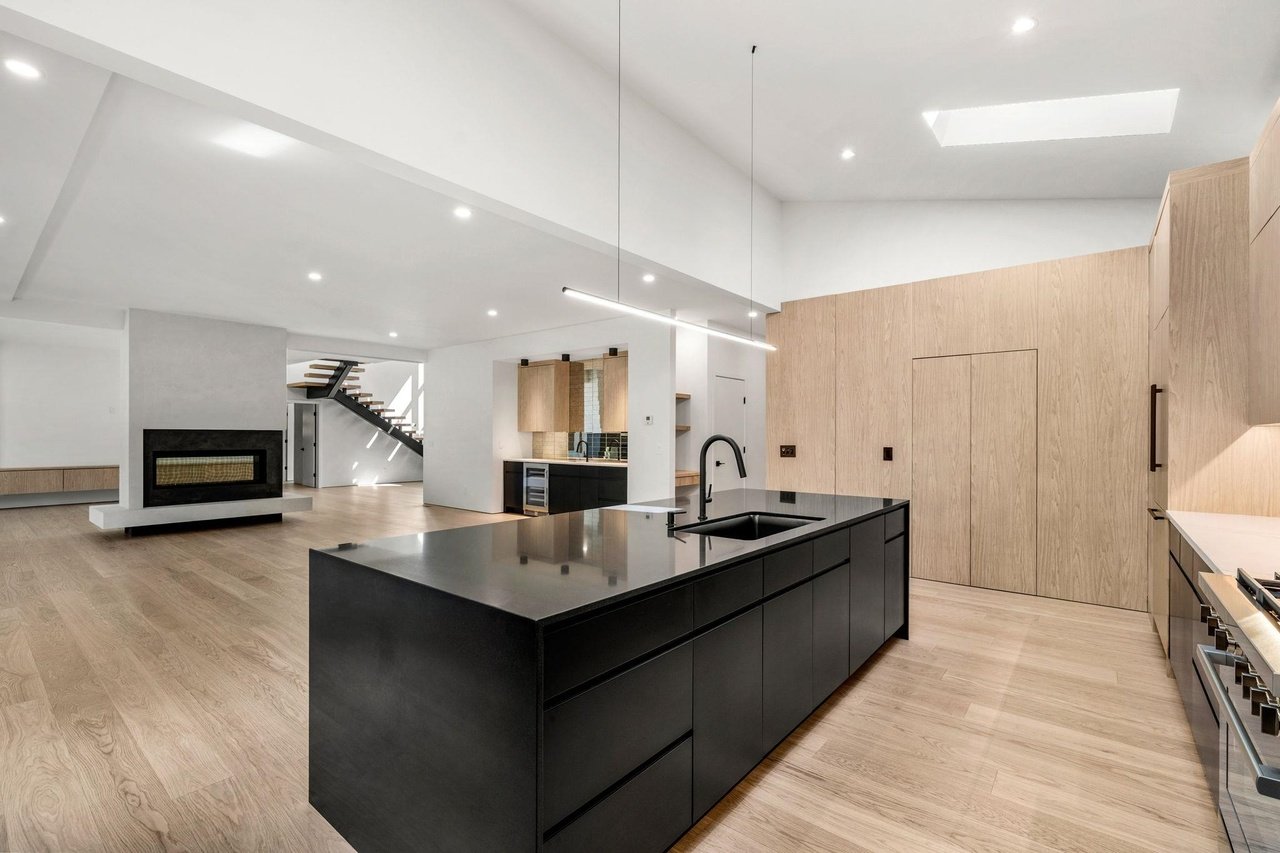
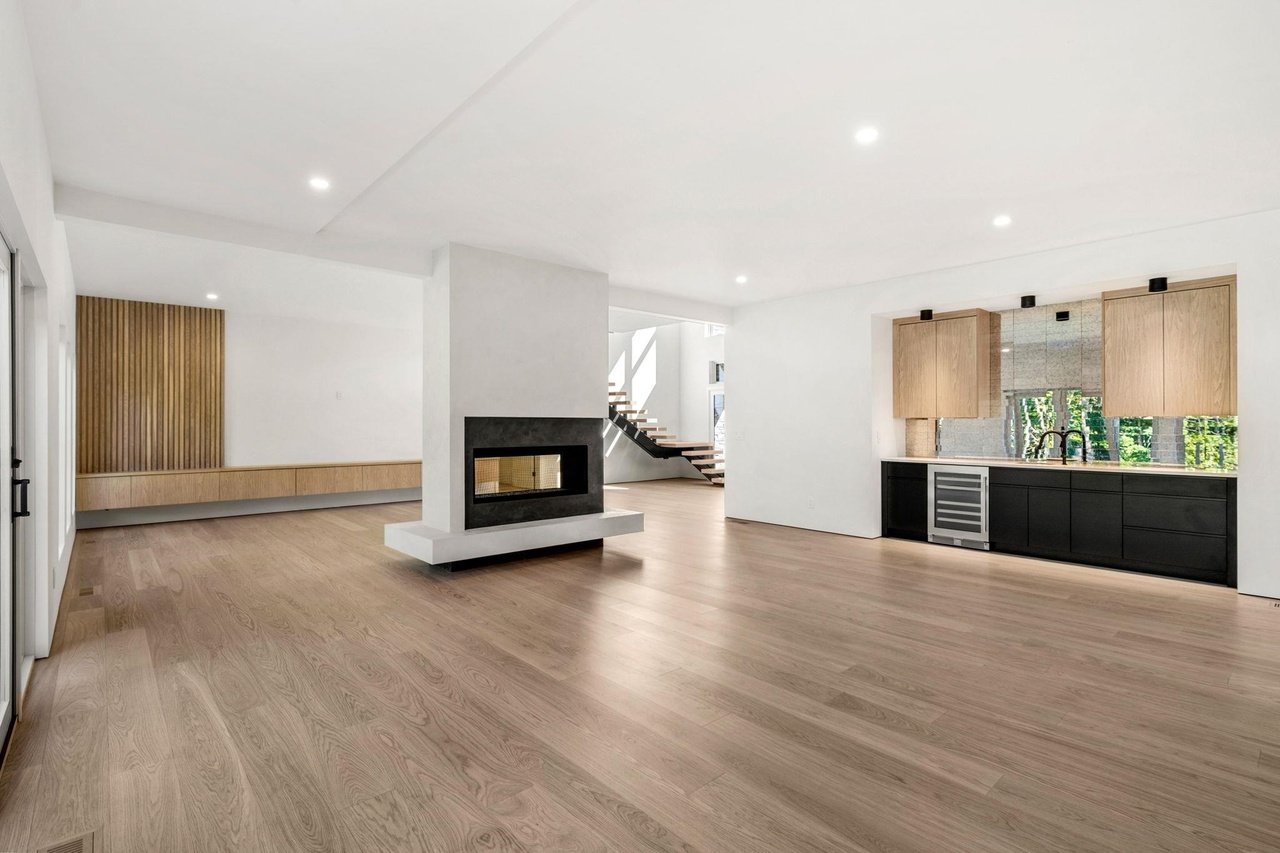
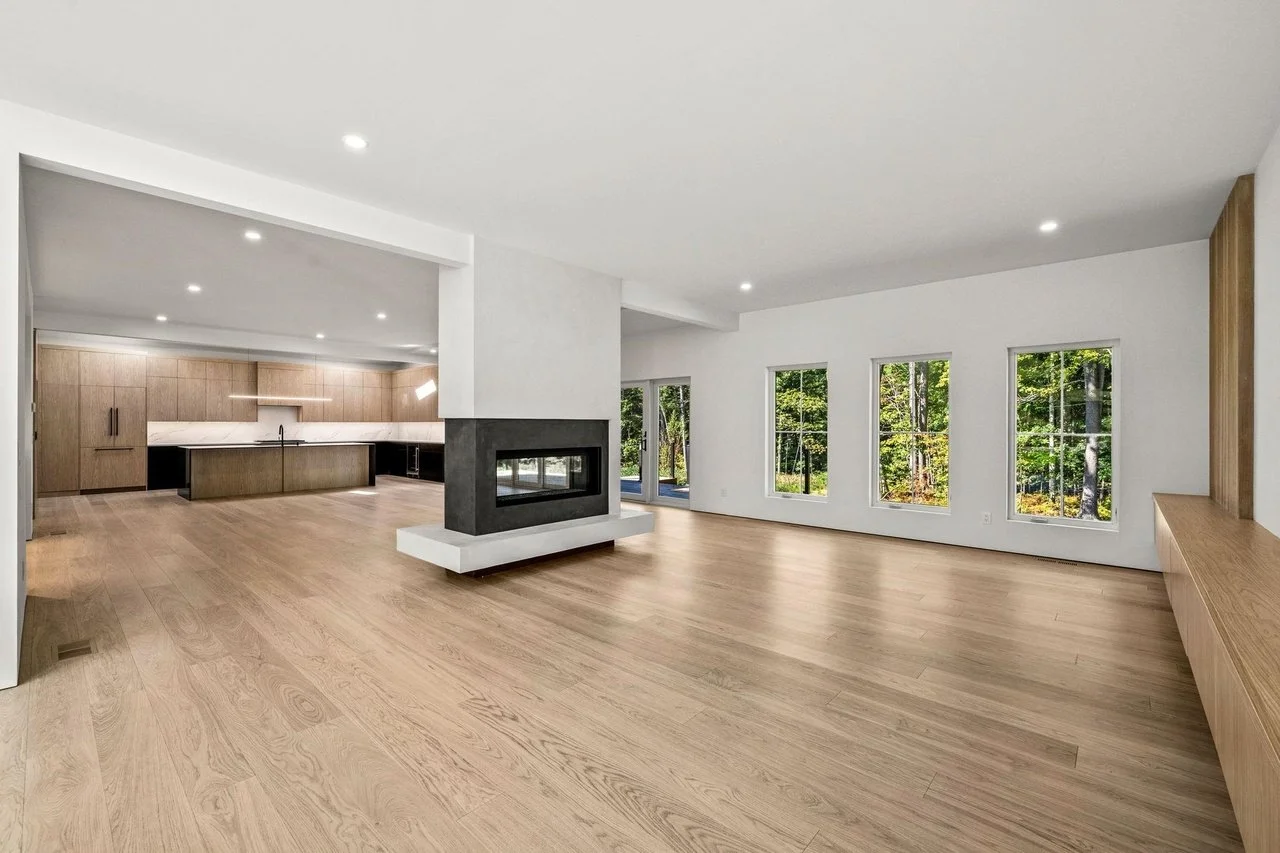
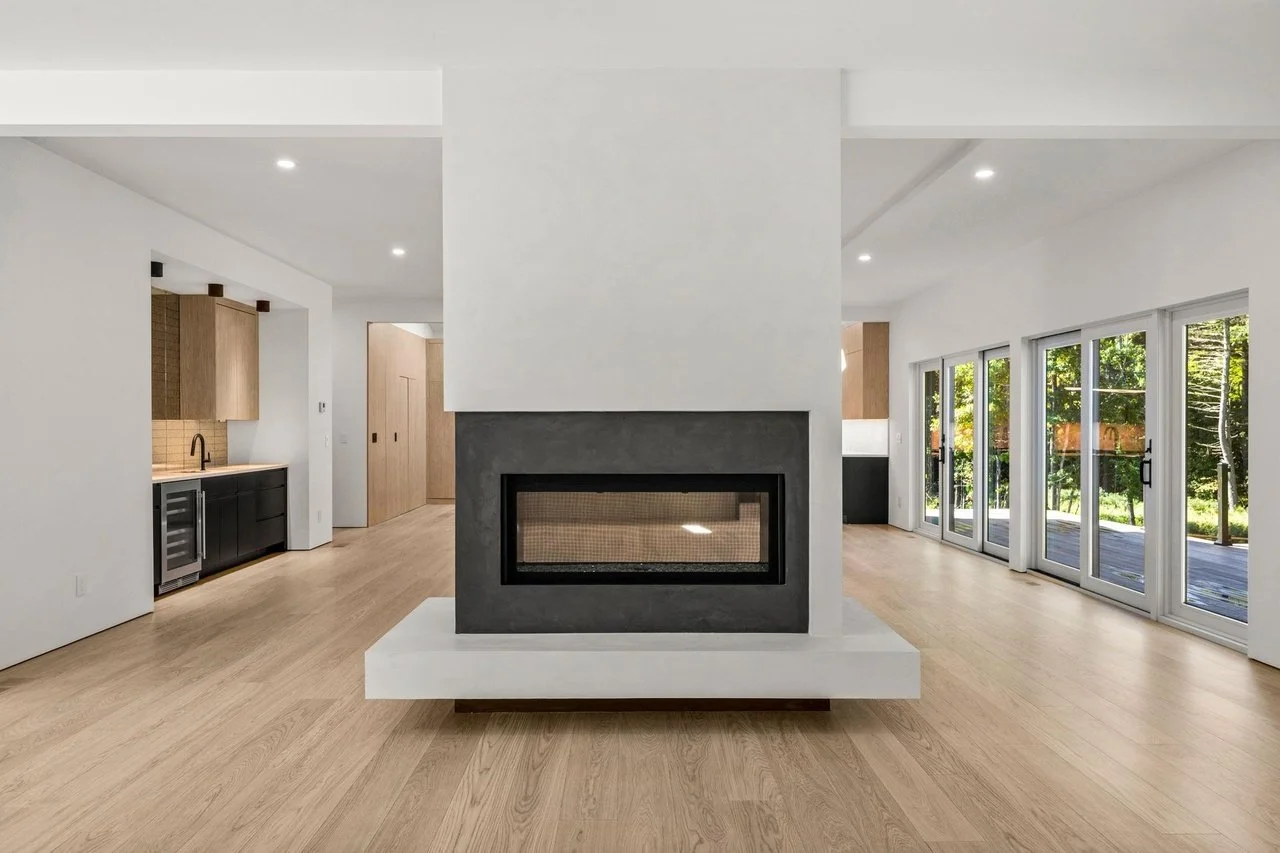
The kitchen, dining, and living areas flow together as the center of the home, with a dramatic double-sided fireplace helping define the spaces while maintaining visual connection.
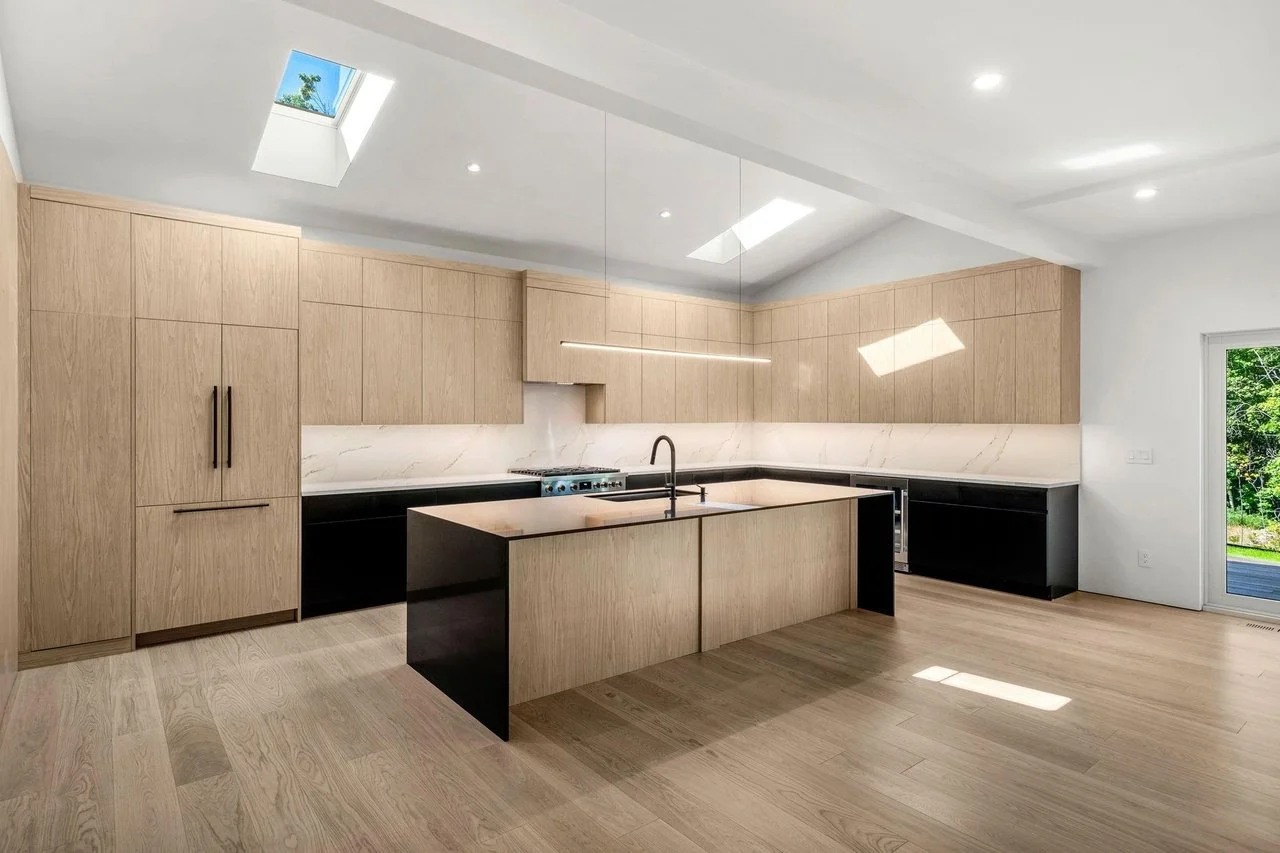
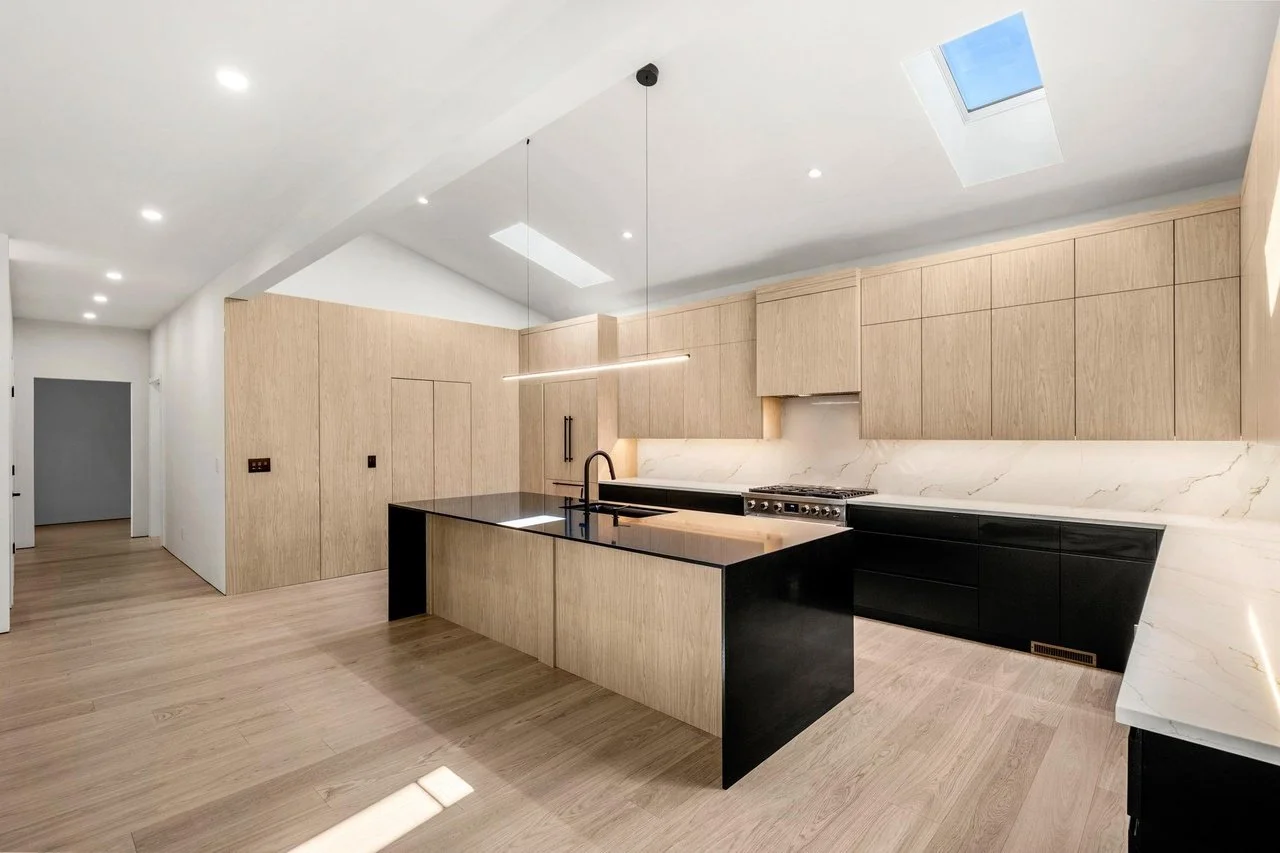
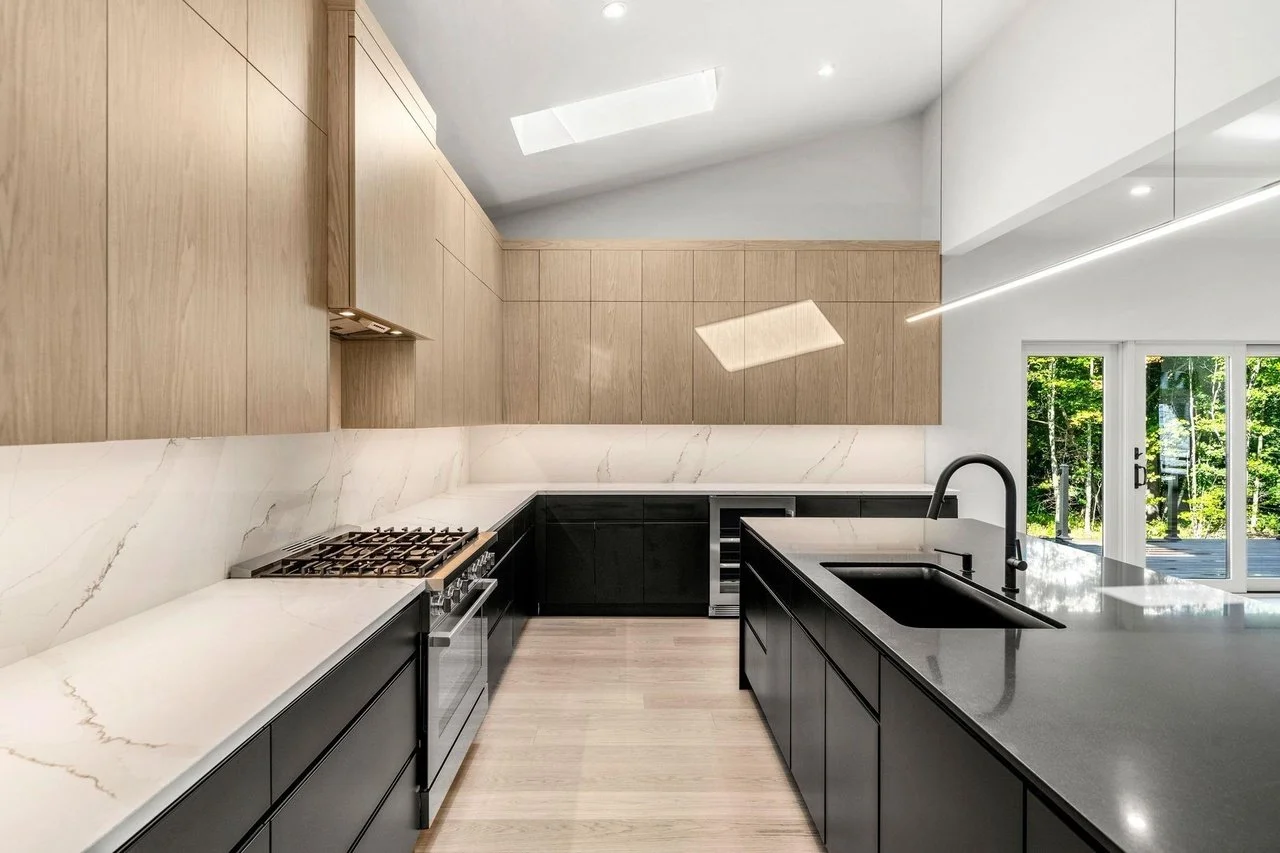
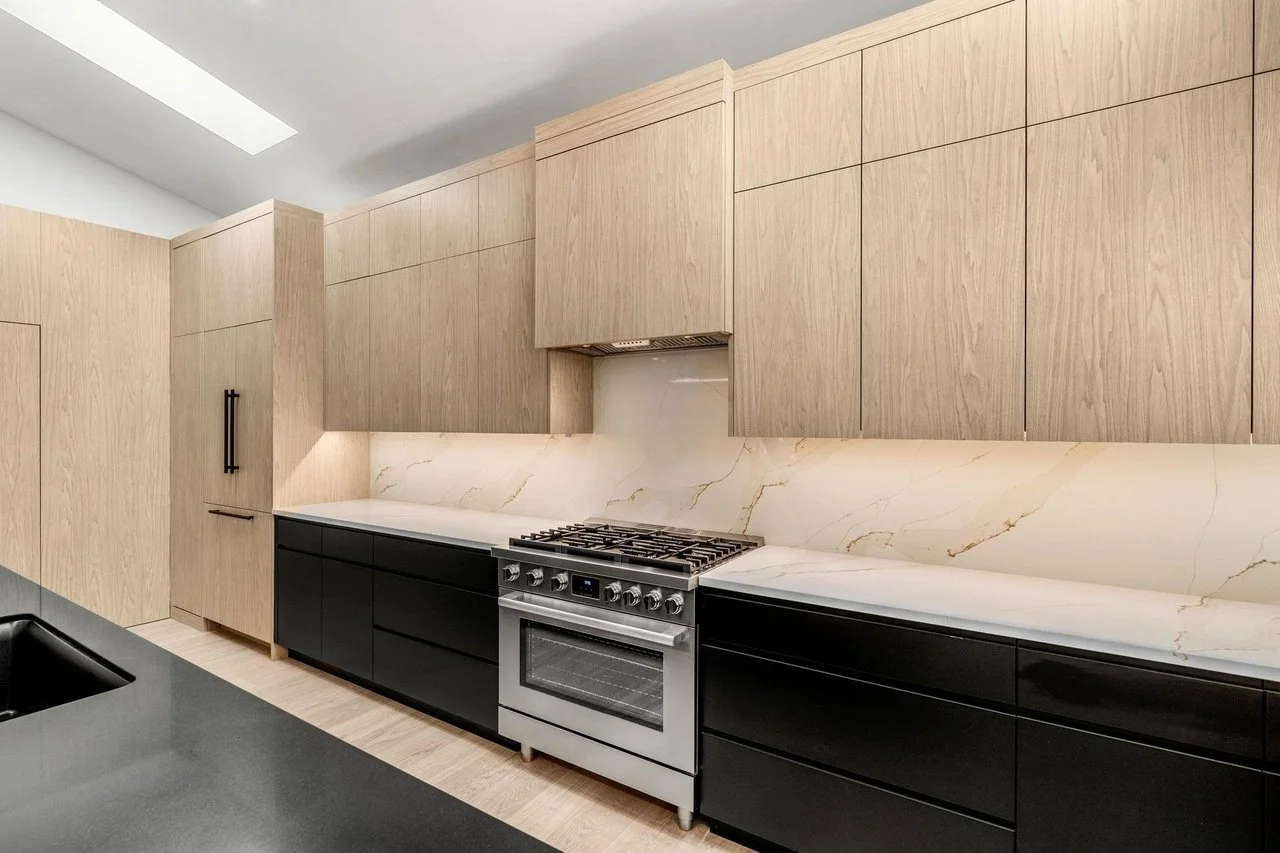
The kitchen is intentionally minimal but highly functional, featuring Cabico cabinetry, concealed refrigerator and dishwasher panels, a full-height quartz backsplash, matte-black waterfall island, and extensive integrated storage.
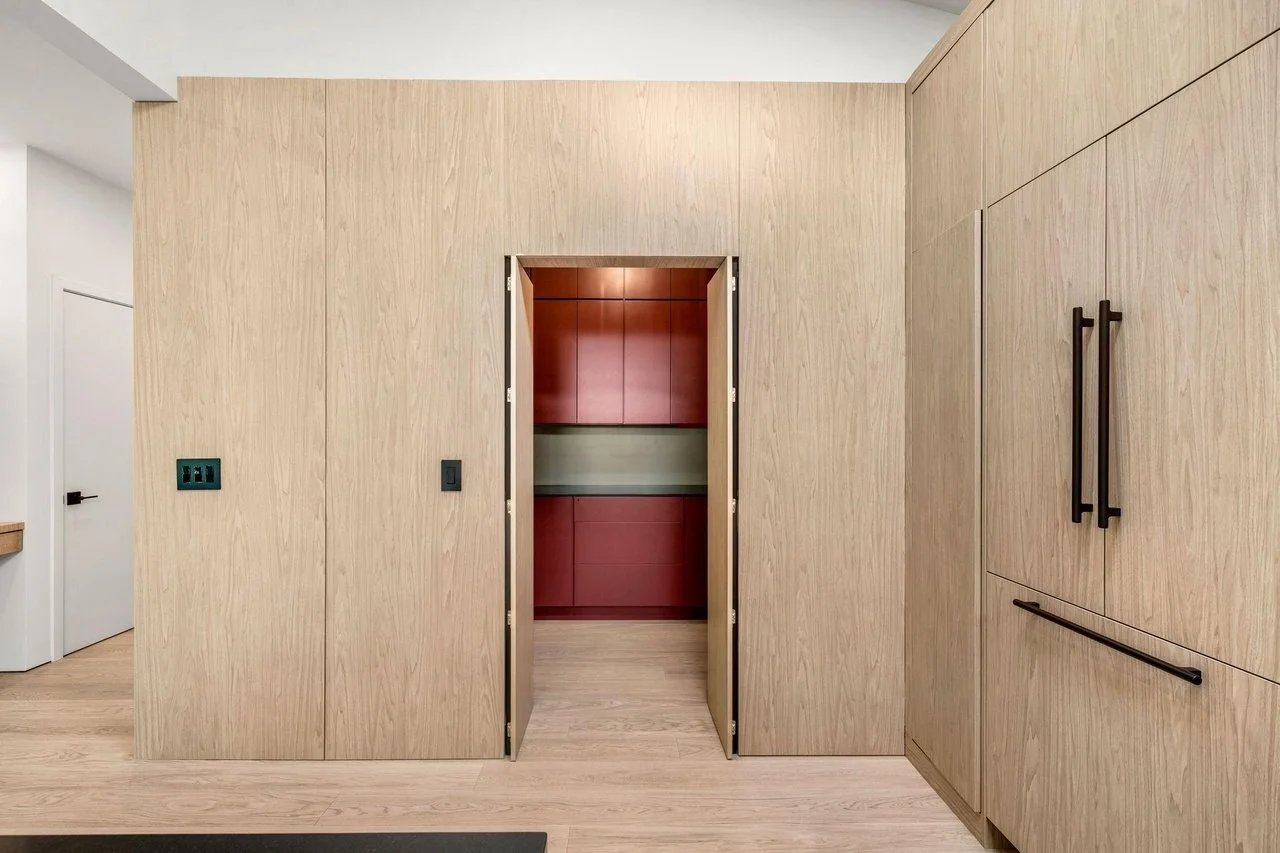
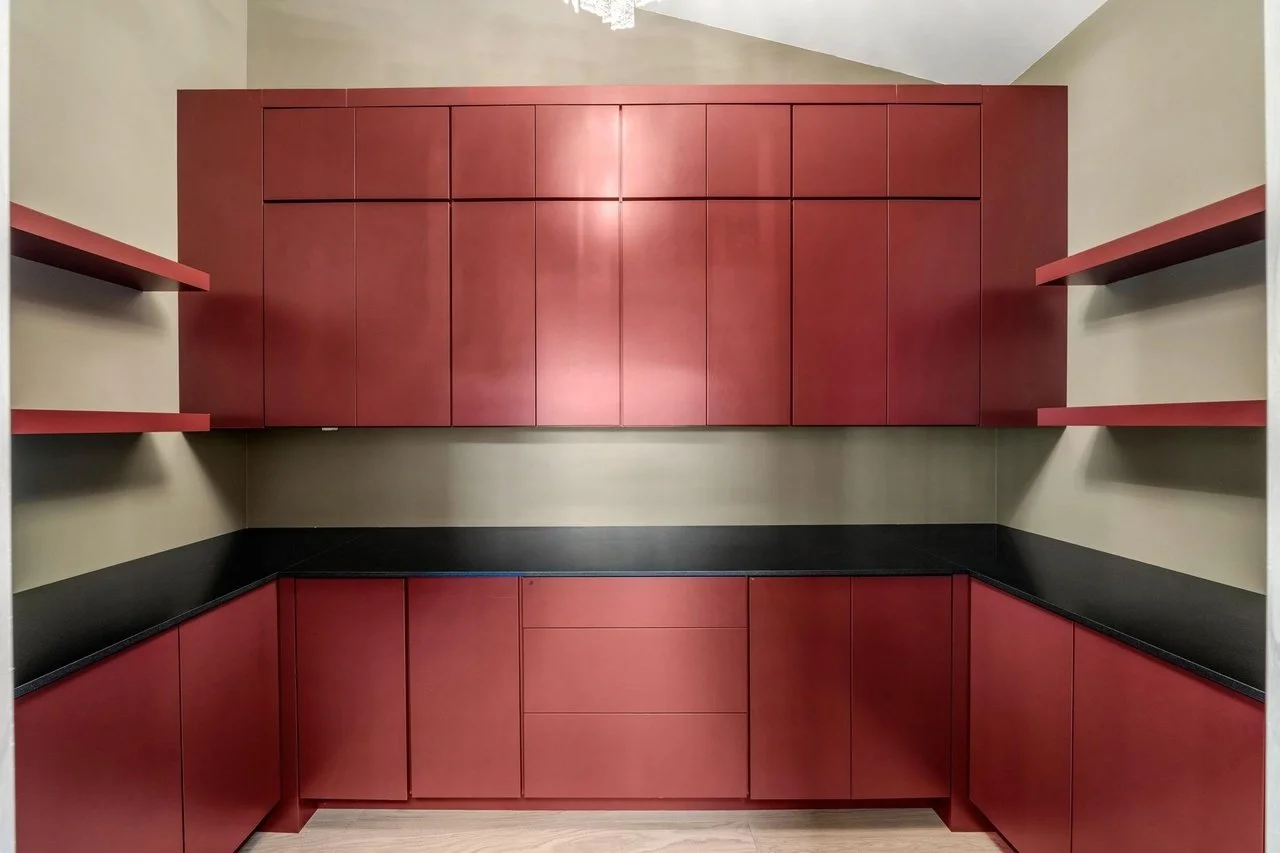
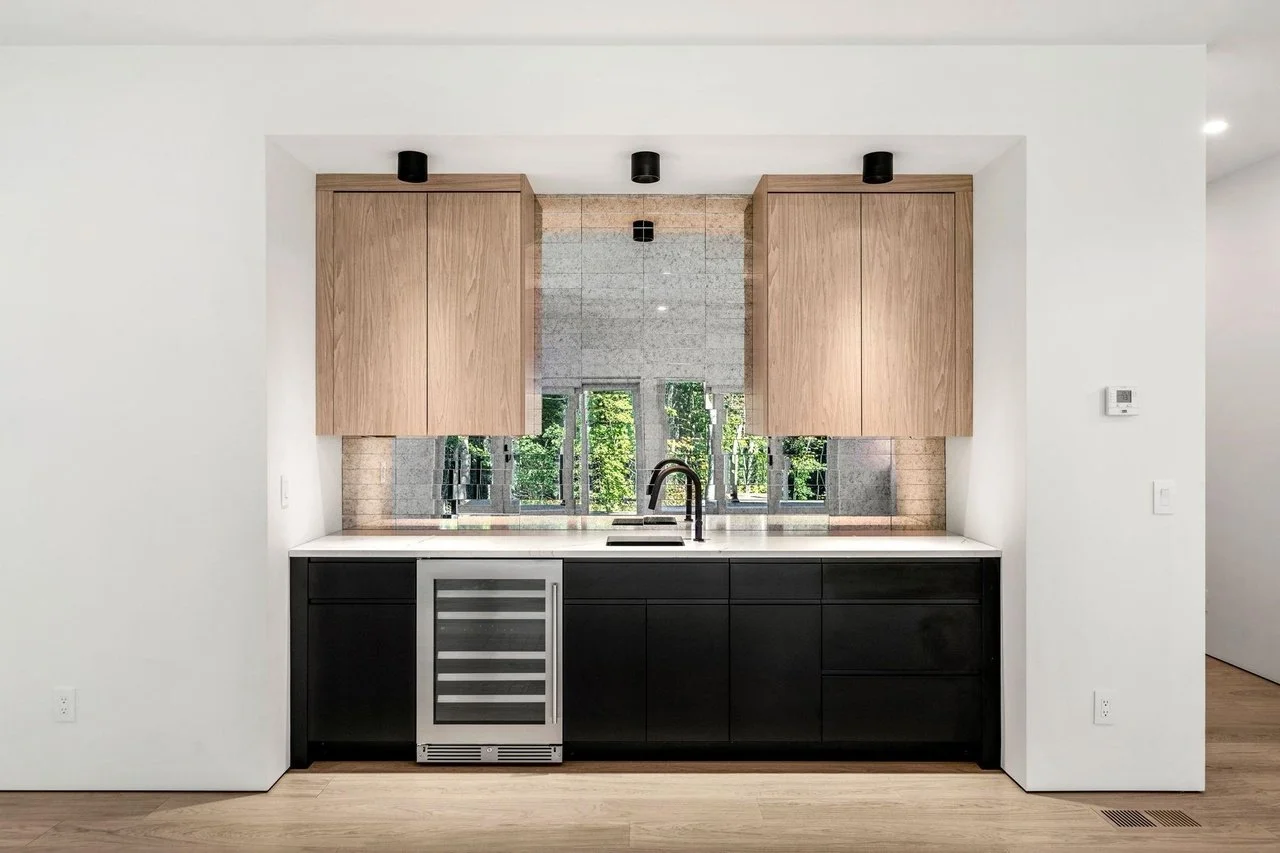
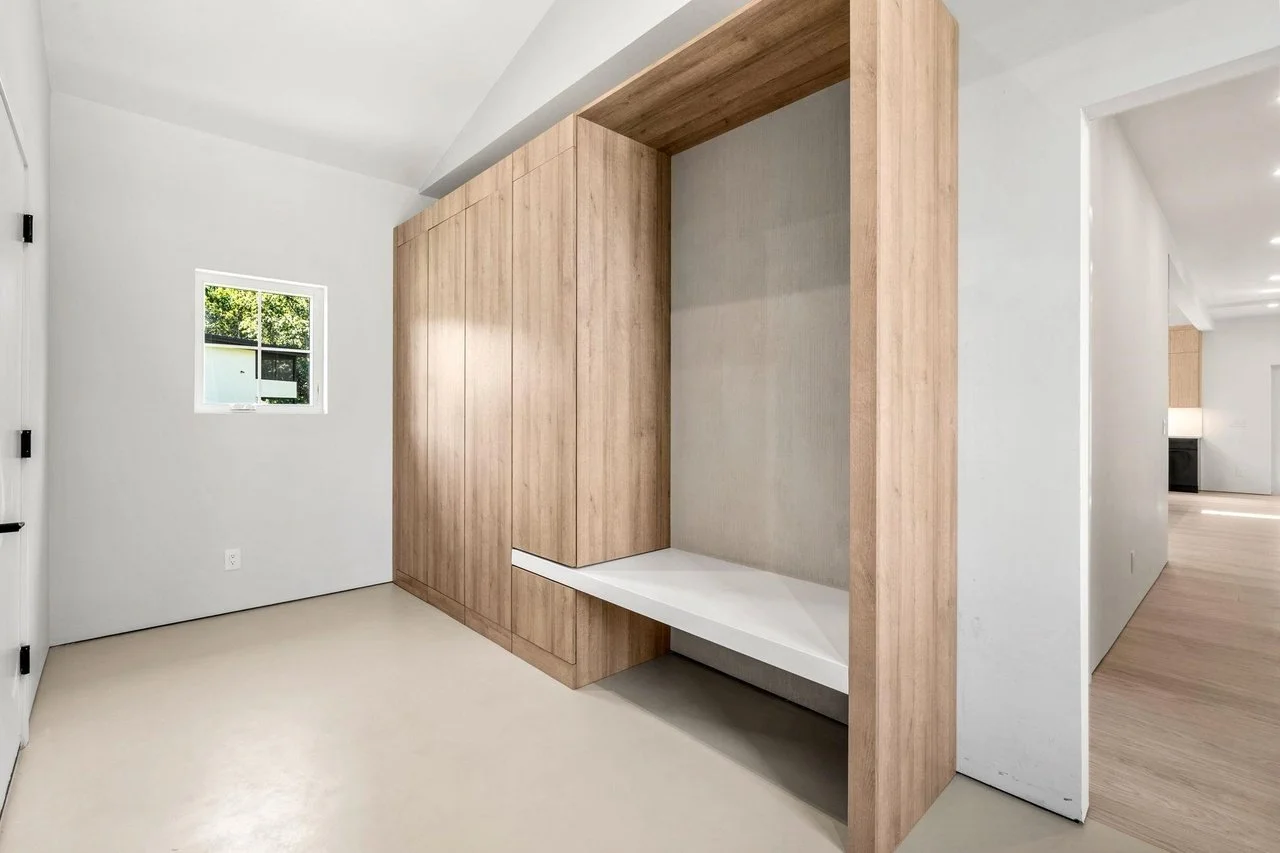
Behind the kitchen, an expanded walk-in pantry is concealed within the cabinetry, allowing it to visually disappear when desired. A dedicated coffee bar, custom mudroom bench, and thoughtfully placed storage turn everyday routines into part of the overall design.
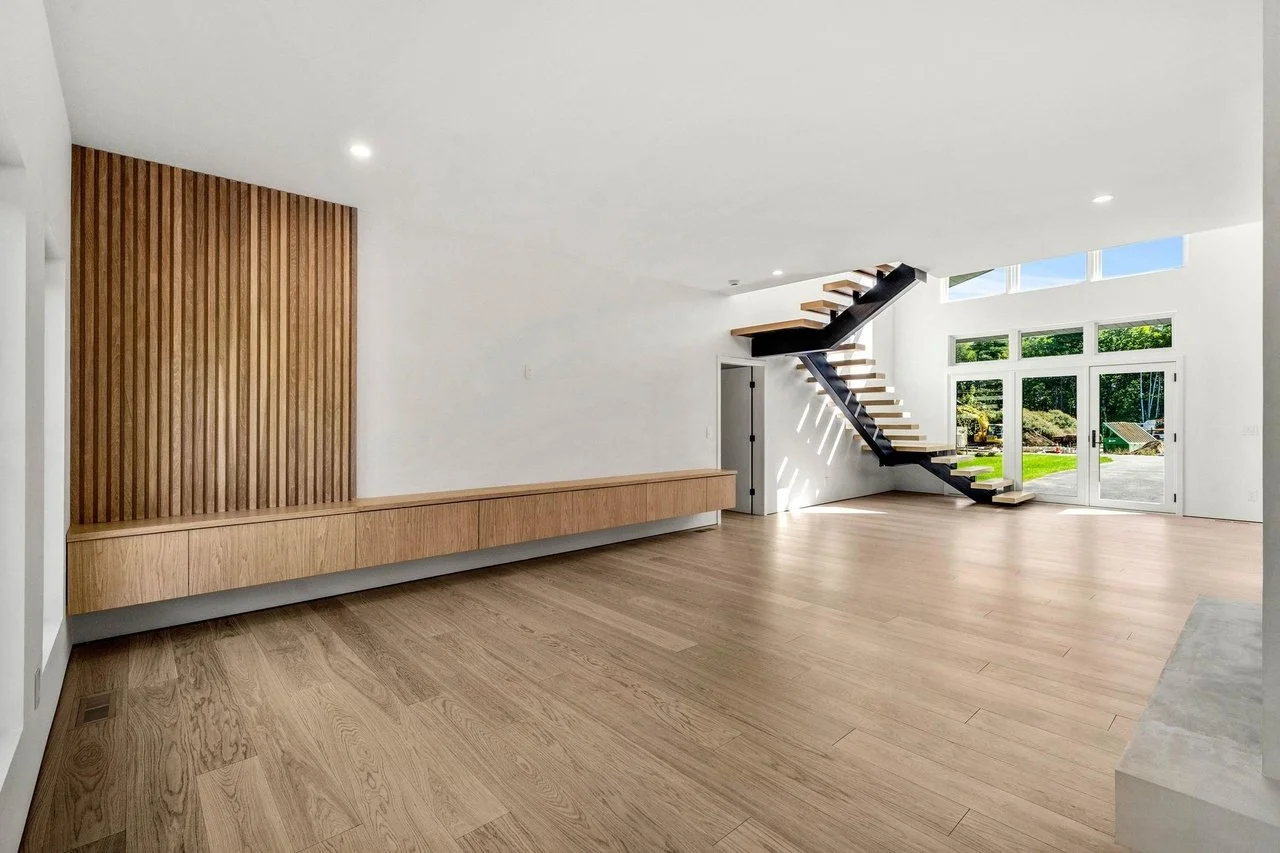
An open-riser staircase introduces another sculptural moment while maintaining openness and sightlines through the main level.
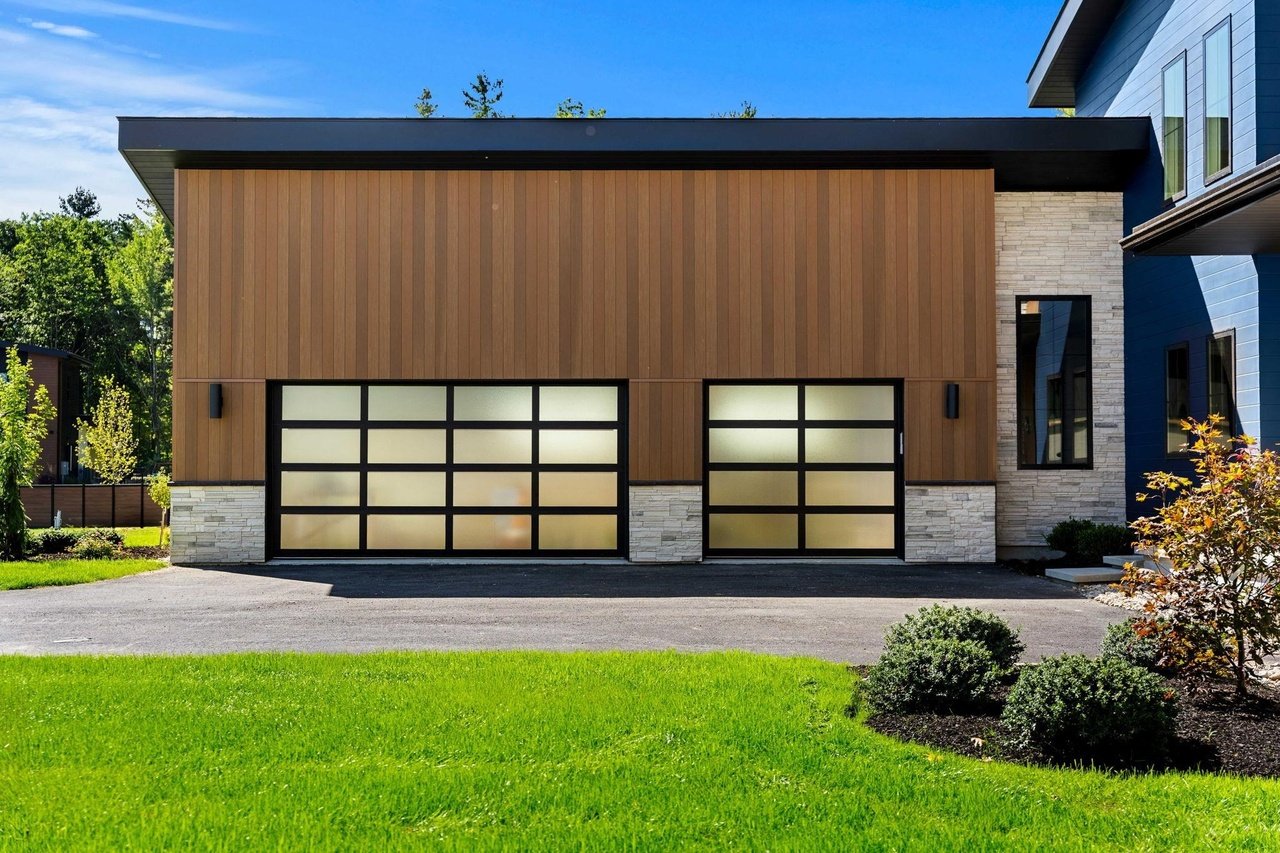
The home's three-car garage includes an oversized bay designed to accommodate larger vehicles, recreational equipment, or specialty storage.
Architecturally, that created another challenge.
A garage of this scale can easily dominate a home's front elevation. RWH used shifting roof angles, vertical wood cladding, stone, and carefully controlled proportions to break down the mass and integrate the garage into the overall composition.
Rather than appearing as an attachment to the house, it becomes part of the architecture.
With a first-floor primary suite, home office, open-concept living spaces, mudroom, pantry, coffee bar, three upstairs bedrooms, balcony access, and a full walkout lower level, circulation had to remain intuitive.
RWH organized the home around a series of functional hubs rather than conventional hallways.
The kitchen, mudroom, central fireplace, staircase, and primary-suite entry establish a natural rhythm through the first floor. Spaces transition easily into one another while still maintaining distinct identities.
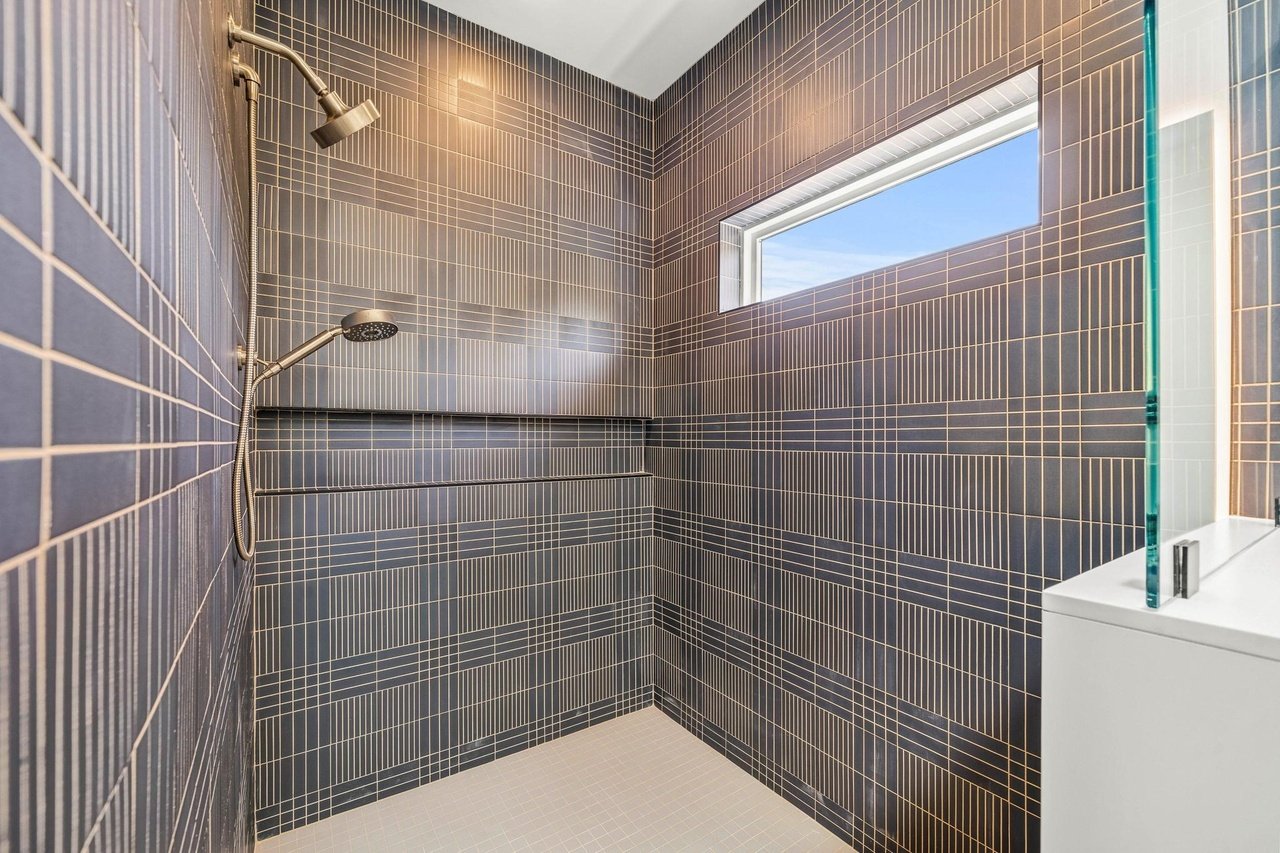
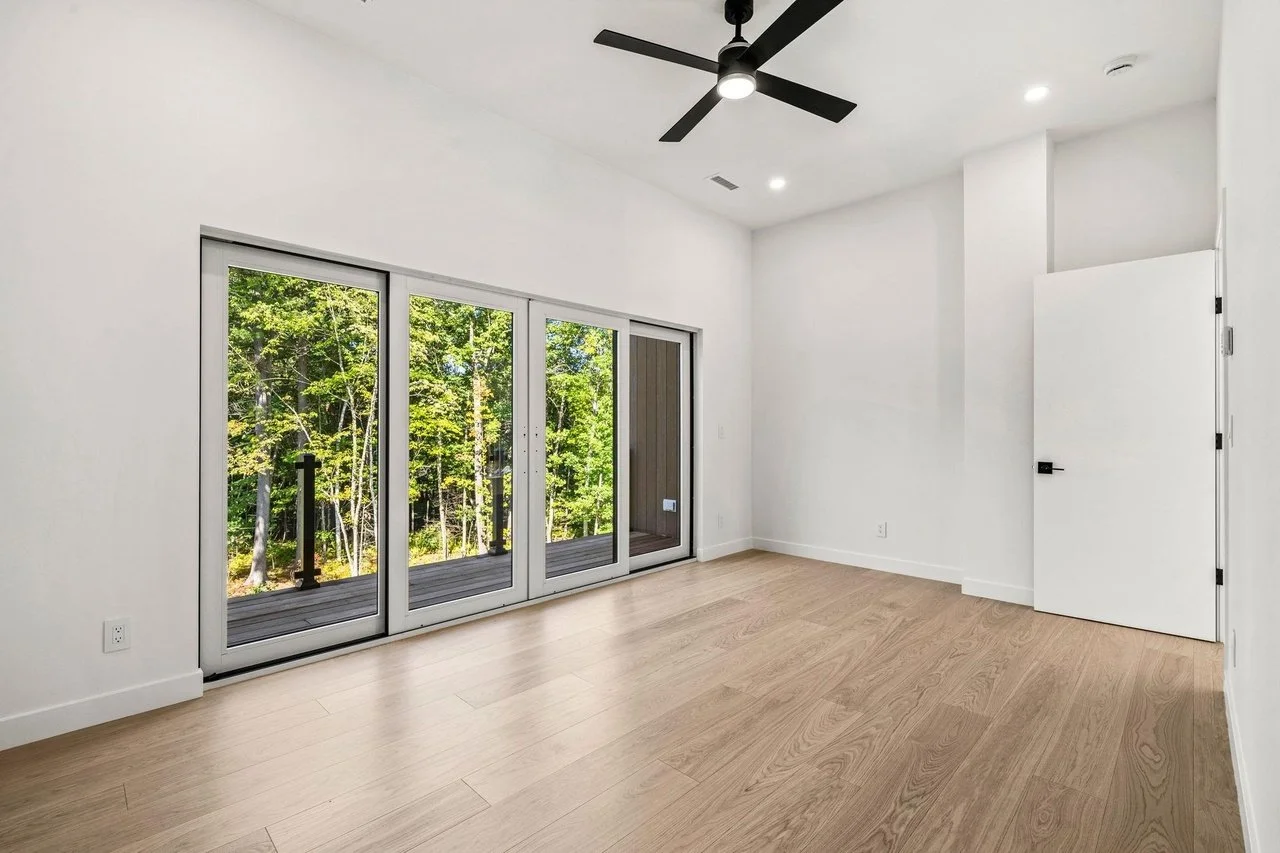
Upstairs, three additional bedrooms provide privacy for family or guests, each with generous storage. One bedroom features an expansive en-suite bathroom, adding another private retreat to the upper level.
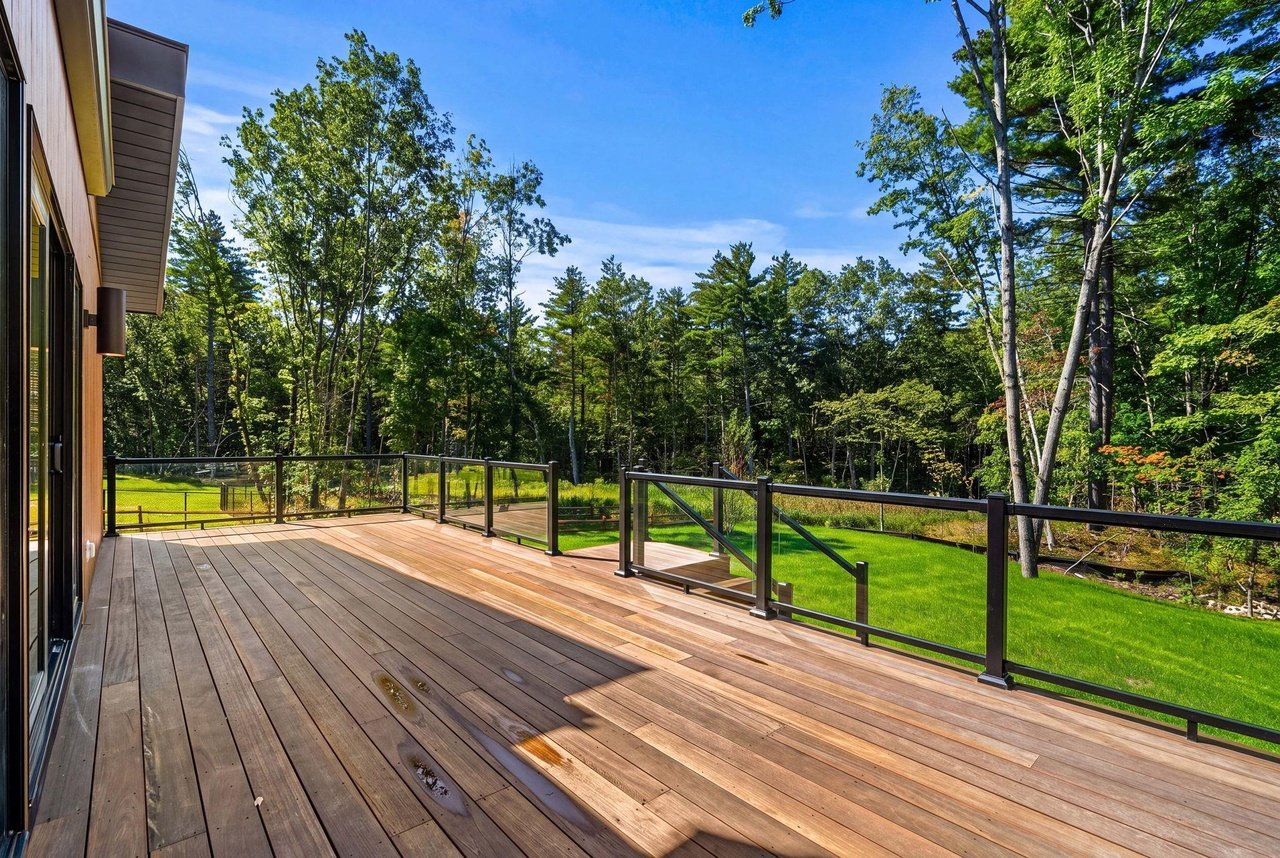
A rear deck and private balcony extend the architecture outdoors, while the full walkout basement creates significant opportunity for additional living, entertainment, fitness, or recreation space.
6 Whistle Hill is not modern simply for the sake of being different.
Every architectural decision—from window placement and roof geometry to material transitions and interior circulation—was driven by how the home should feel and function.
The collaboration between RWH Architect and DHB Homes brings together design and craftsmanship in a residence that is clean without feeling cold, dramatic without being excessive, and luxurious without relying on ornament.
Currently offered at $2.5 million, 6 Whistle Hill represents more than a new home. It signals the evolution of residential design in Southern New Hampshire.